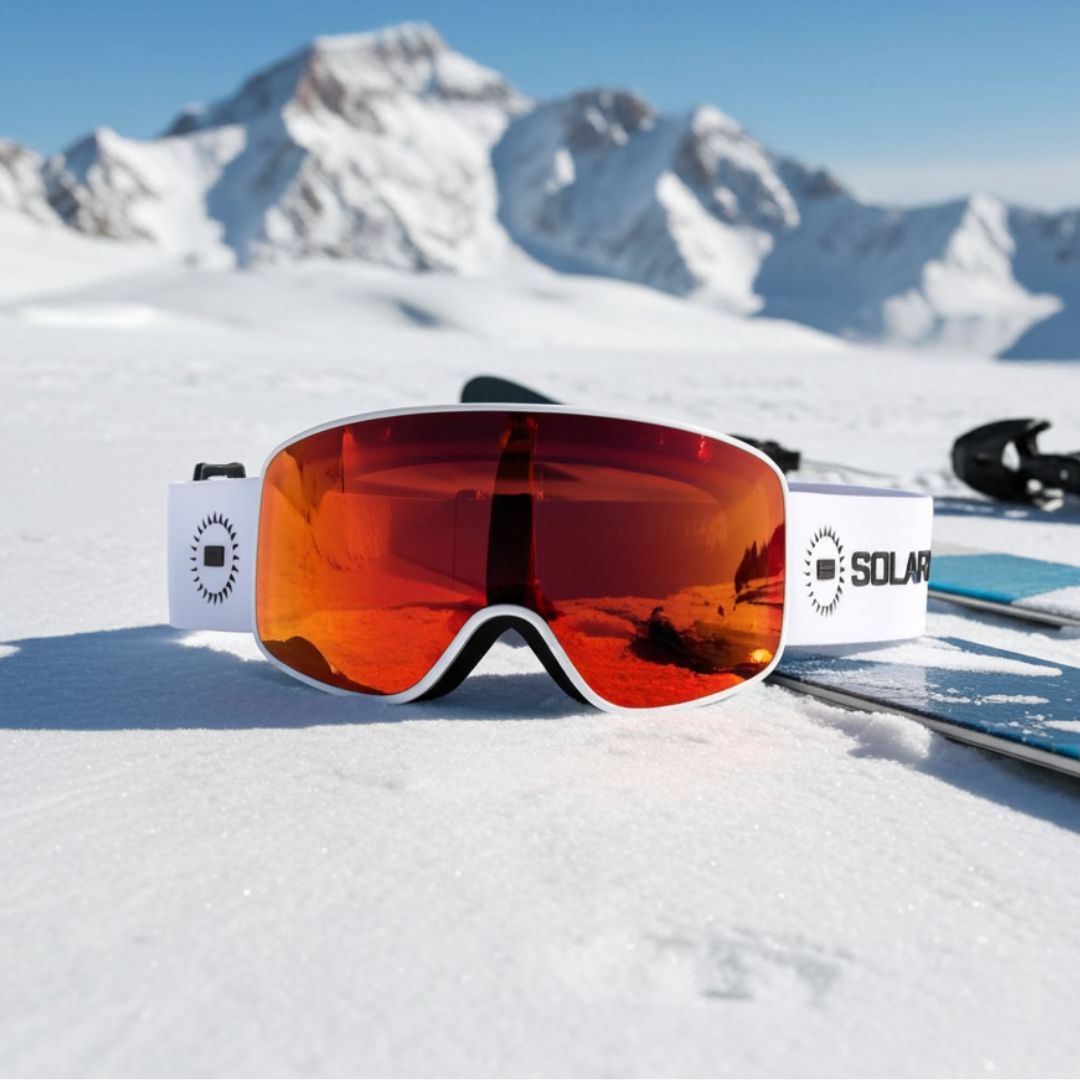
For skiers and snowboarders, vision isn't just about seeing; it's about reacting. The ability to quickly spot a mogul, a patch of ice, or a subtle change in the snow's texture can mean the difference between a great run and a nasty fall. This is why the lens in your ski goggles is so much more than just a piece of tinted plastic. It's a sophisticated tool designed to enhance your vision, cut through glare, and give you a crucial edge on the mountain.
Understanding the science behind ski goggle lenses can help you choose the right pair for any condition and transform your experience on the slopes.
The Role of Visible Light Transmission (VLT)
The most important metric for any ski goggle lens is its Visible Light Transmission (VLT). This is a percentage that indicates how much light the lens lets through to your eye.
· Low VLT (0-20%): These are dark, heavily tinted lenses ideal for bright, sunny days. They block a high percentage of light, reducing squinting and eye strain from the intense sun reflected off the snow. A common feature of these lenses is a mirrored coating, which reflects a significant amount of light away from the eye.
· Medium VLT (20-40%): This is the most versatile category, designed for partly cloudy or mixed conditions. These lenses provide a good balance of sun protection and light transmission, making them a solid choice for a day with varying weather.
· High VLT (40-80%): Lighter-tinted lenses, often in yellow, rose, or orange, are perfect for low-light, overcast, and foggy conditions. They allow more light to reach your eye, and their specific tints enhance contrast, making it easier to see bumps and contours on a flat, white surface.

Beyond Tint: Lens Technologies That Make the Difference
While VLT is the primary factor, several advanced technologies work in tandem to improve your vision.
Polarization: The Glare Eliminator
Polarized lenses are the secret weapon against blinding glare. Sunlight bounces off horizontal surfaces—like a flat patch of snow or a sheet of ice—in a concentrated, horizontal wave. This intense reflection is what we experience as glare. A polarized lens contains a special filter that blocks this horizontal light, allowing you to see the terrain more clearly. This is especially useful for spotting icy patches that might otherwise be invisible.
Photochromic Lenses: The All-in-One Solution
For skiers who don't want to carry multiple lenses, photochromic lenses are a game-changer. These lenses automatically adjust their tint based on the amount of UV light they are exposed to. On a bright, sunny morning, they darken to a low VLT. As clouds roll in, they lighten, providing clear vision in low-light conditions. This technology adapts to changing weather, giving you a single lens for a full day on the mountain.
Spherical vs. Cylindrical Lenses: Field of View and Distortion
The shape of the lens also plays a key role in performance.
· Cylindrical Lenses: These lenses have a horizontal curve but are flat vertically. They are more affordable and a classic look, but the flat surface can cause a slight optical distortion and a less-than-perfect peripheral view.
· Spherical Lenses: These lenses curve both horizontally and vertically, like a bubble. This shape mimics the curve of your eye, providing a wider field of view, reduced glare, and minimal optical distortion. They also create a larger volume of air between your face and the lens, which is a major factor in anti-fog performance.
Anti-Fog Technology: The Unsung Hero
Fogged-up goggles are a skier's worst nightmare. Most modern ski goggles combat this with two key features:
1. Double-Layered Lens: The air pocket between the two lenses acts as a thermal barrier, preventing the cold outer lens from condensing moisture from the warm inner lens.
2. Anti-Fog Coating: The inner lens is treated with a hydrophilic coating that absorbs moisture, preventing it from forming as fog. Proper ventilation channels in the goggle frame also help to circulate air and prevent moisture buildup.
By understanding the science behind VLT, polarization, lens shape, and anti-fog technology, you can make an informed decision when choosing your next pair of ski goggles. It's an investment that will not only protect your eyes but also help you see the mountain in a whole new light.

👋 Ready to see the difference for yourself?
If you're searching for sunglasses that check all the boxes, explore Solaro Shades Sports Sunglasses. Designed with athletes in mind, our glasses offer interchangeable lenses, premium frames, full UV protection, and a limited lifetime warranty to keep you covered on and off the court.
You can also check out our previous blog on The Unseen Dangers: Protecting Your Eyes from UV Rays and Snow Blindness
Stay sharp. Stay protected. And never let the sun win the point.