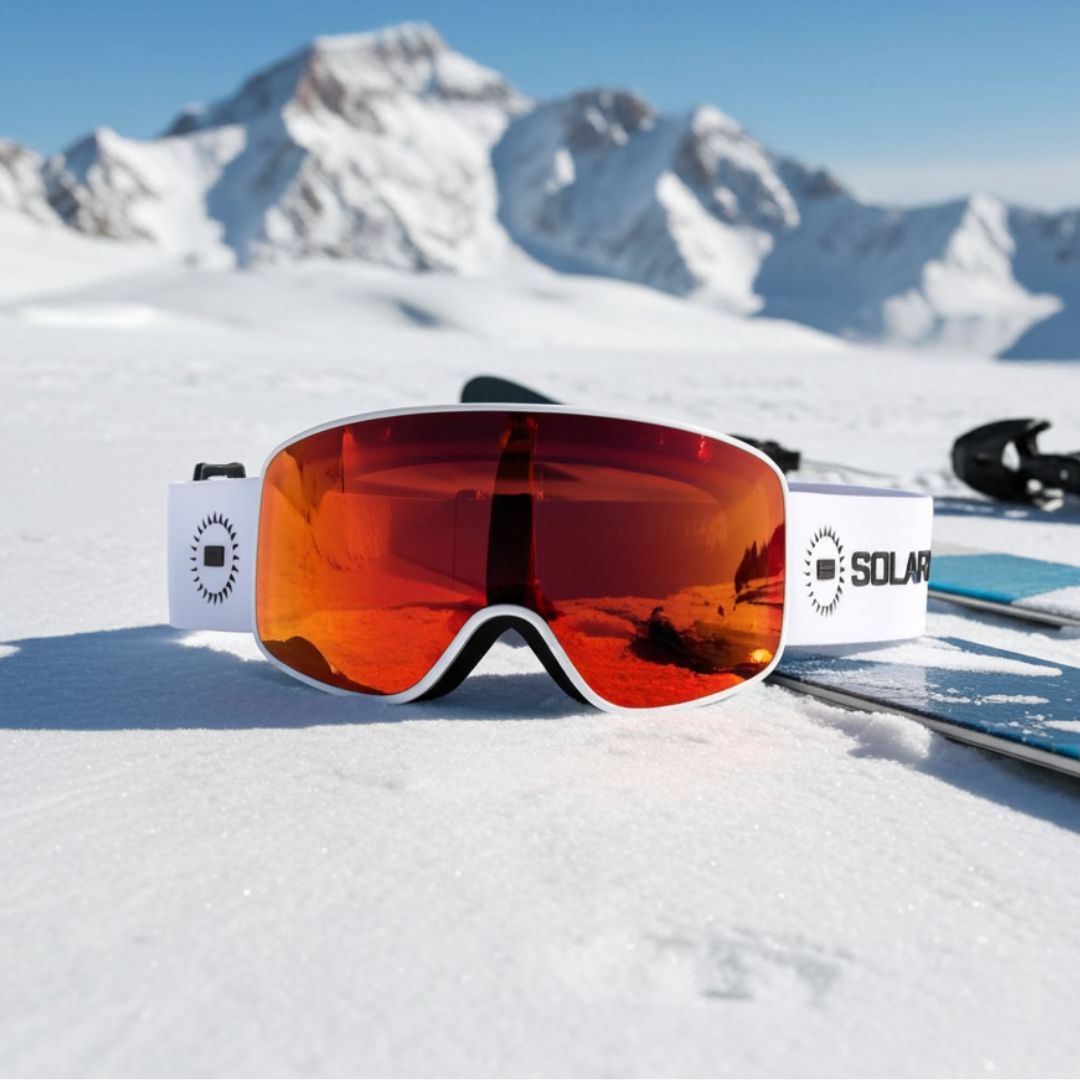
When you think of skiing, “goggles” usually means full-frame snow goggles—big lenses, foam, straps, anti-fog tech. But there’s been growing interest in hybrid or crossover eyewear: gear that works across many sports but still holds up under the stresses of alpine terrain, snow, glare, and cold. Solaro Shades is one brand pushing into that territory. So let’s take a close look: can they be the all-sport solution for skiers in 2025?

What Are Solaro Shades?
· Originally designed for baseball/softball: high sun glare, fast motion, need for contrast and durability. (Solaro Shades)
· Over time the brand has positioned itself more broadly: multi-sport, all-weather, with features like interchangeable lenses, anti-slip grip, etc. (Solaro Shades)
· Their marketing claims they’re made to handle sun, snow, glare, motion, and environmental challenges. (Solaro Shades)
What Ski Goggles (Traditional) Do Well in 2025
To evaluate Solaro Shades, first let’s understand what snow-/ski-goggles are now offering, as of 2024-2025. A number of expert reviews and testing summaries highlight these must-haves:
|
Feature |
Why it matters |
|
Lens quality: contrast, clarity, for both bright & low light; sometimes photochromic or interchangeable lenses. |
Skiing involves rapidly changing light: midday glare, storm light, shaded trees. Being able to see detail in snow helps with safety, speed, and comfort. (Switchback Travel) |
|
Ventilation & anti-fog |
Cold + exertion + helmet = foggy lenses. Good goggle systems use foam/vent channels, double lenses, coatings. (SKI) |
|
Field of view and fit |
Peripheral vision helps for awareness, judging terrain, seeing hazards. Also, helmet compatibility and face shape matter. (Switchback Travel) |
|
Durability |
Hits, snow, moisture, UV, temperature swings—all brutal. Lens swapping mechanisms, frame strength, coatings, etc. (GearJunkie) |
|
Adaptability / versatility |
Many skiers want fewer pieces of gear: one goggle for resort, backcountry, changing light conditions; maybe even wearable beyond skiing. Photochromic lenses, quick swap systems are being praised. (Switchback Travel) |
Strengths & Weaknesses: Solaro Shades vs Traditional Ski Goggles
Let’s compare where Solaro Shades seem to succeed—or fall short—when stacked up against what modern ski goggles offer.
Strengths
1. Versatility / Crossover Use
Solaro Shades are built to be used in multiple sports (baseball, biking, hiking, etc.), which means if you’re ski-touring, doing basecamp style, or have limited gear space, having eyewear that works well in snow and elsewhere is attractive. (Solaro Shades)
2. Interchangeable Lenses & Multiple Environments
According to Solaro’s description, they offer several lens options (mirror-coated, polarized, low‐light etc.) and a modular system. That helps adapt to varying light and glare. (Solaro Shades)
3. Lightweight / Comfort / Fit
Without the bulky foam of full goggles, one would expect sunglasses-style gear to impose less pressure under helmets, less sweat buildup, more portability. Solaro markets along those lines. (Solaro Shades)
4. All-weather & anti-glare features
Their lenses include polarized and mirror-coated options; some anti-fog or ventilation design is implied. These are necessary for snow glare and sun at high altitude. (Solaro Shades)
Weaknesses / Trade-offs
1. Fogging & Snow Ingress
Traditional goggles wrap around the face, seal out snow and cold air, and include foam and venting specifically engineered for snow sports. Shades style, especially without full coverage or specialized seals, may allow snow, wind, and moisture in. Even with vents, keeping them fog-free in heavy exertion or sudden drops in temperature is a tougher challenge.
2. Lens Darkness / VLT for Bright, Snowy Conditions
Snow surfaces reflect a lot of light; mirrored/dark lenses and polarized coatings help. If a shade’s lens doesn’t get dark enough or lacks adequate protection, glare or UV damage could still be an issue. Also, in whiteout or flat light, the lens options must support enhancing contrast; shades often have smaller lenses which may reduce coverage or allow light leaks from the sides or above.
3. Durability Under Harsh Conditions
Snow goggles often are made to survive contact with ice, falls, cold, moisture, high wind. Frames & lens swap systems have to endure those. Sun shades or hybrid designs sometimes compromise on robustness (frame flex, scratch resistance, lens attachment strength). Also, exposed lens surfaces are more likely to get scratched or damaged.
4. Fit with Helmets, Face Shapes, Peripheral Vision
Goggles are designed to work with helmets, sometimes with straps that go around, foam that conforms, lenses large enough to cover a broad field of view. Shades might not give the same side protection or peripheral clarity. If they sit too low or too high, or are too narrow, they might interfere with field of view or be uncomfortable under a helmet.
5. Low-Light / Night / Whiteout Performance
While lens swaps help, the shades might still struggle in very low light or storm conditions compared to goggles designed with photochromic or strong contrast-boosting, or goggles that have double lenses with thermal or anti-fog layers.

So: Are Solaro Shades Ultimate for Skiers in 2025?
Putting it all together, here’s where I land.
Yes, in many cases. If you’re a skier who:
· doesn’t want to carry or maintain multiple specialized goggles for different light / weather conditions,
· values lighter gear, portability, crossover uses (hiking, biking, etc.),
· mostly ski under conditions where glare is a problem (sun, reflective snow) but low light / whiteout aren't your constant issue, or you have the lens options to handle them,
then Solaro Shades could be very close to an “ultimate” solution. They tick off many boxes for versatility, comfort, style, and adaptability.
But maybe not absolutely for everyone. If you:
· regularly ski in storms, whiteout, or extremely low light,
· do a lot of high-altitude or backcountry skiing where weather changes are abrupt,
· require maximum side and wind protection, full sealing from snow, or wraparound field of view,
· want ultra-high endurance under abrasion, ice, or frequent lens swapping under cold gloves,
then traditional ski goggles (especially premium models) may still outperform a hybrid offer like shades in certain scenarios.
What Would Make Solaro Shades Truly “Ultimate”?
If Solaro wants to fully claim that title, these are features or improvements that could close the remaining gaps:
1. Sealing / wrap-around coverage enhancements
E.g. removable skirts, better side protection, better top coverage to block snow from entering, perhaps some kind of foam or gasket that seals under helmet or hood.
2. Photochromic / adaptive lenses with faster transitions
So lens darkness adapts in real time, reducing need to carry spares or manually swap frequently. Also ensuring high VLT spectrum, especially for low light.
3. Robust anti-fog measures
Excellent venting, double lenses, anti-fog coatings that last, possibly even airflow channels integrated with helmet vents.
4. Durable lens attachment / scratch and impact resistance
Ensuring lens swap system that works even with gloves, in cold, and doesn’t loosen or degrade. Strong coatings on lenses to resist snow/ice scratches.
5. Better helmet compatibility and field of view
Ensuring shades style frames don’t interfere with helmet fit or reduce peripheral vision; perhaps optional straps or adapters; ensuring no light leaks.
6. Consistent availability of specialized lenses
If low‐light / storm / night lenses are available, affordable, and interchangeable, that greatly enhances the usable envelope.
Final Verdict
Solaro Shades represent a compelling alternative to traditional ski goggles in 2025. For many skiers—particularly those who value lightweight gear, multi-sport crossover, aesthetics, and good performance in glare or mixed condition—they may well be “good enough” or perhaps better than traditional goggles in many day-to-day use.
Whether they are the ultimate depends on your priorities. If you demand maximum protection, vision in all light conditions, and rugged durability under the harshest alpine environments, classic snow goggles (especially top-tier models) still have the edge.
If I were skiing this season and could carry only one pair of eyewear, with the right lens options, Solaro Shades might just be that choice. But I might still pack a full goggle as backup for storm days or whiteout.
👋 Ready to see the difference for yourself?
If you're searching for sunglasses that check all the boxes, explore Solaro Shades Sports Sunglasses. Designed with athletes in mind, our glasses offer interchangeable lenses, premium frames, full UV protection, and a limited lifetime warranty to keep you covered on and off the court.
You can also check out our previous blog on Can Solaro Shades Replace Your Ski Goggles? Stay sharp. Stay protected. And never let the sun win the point.