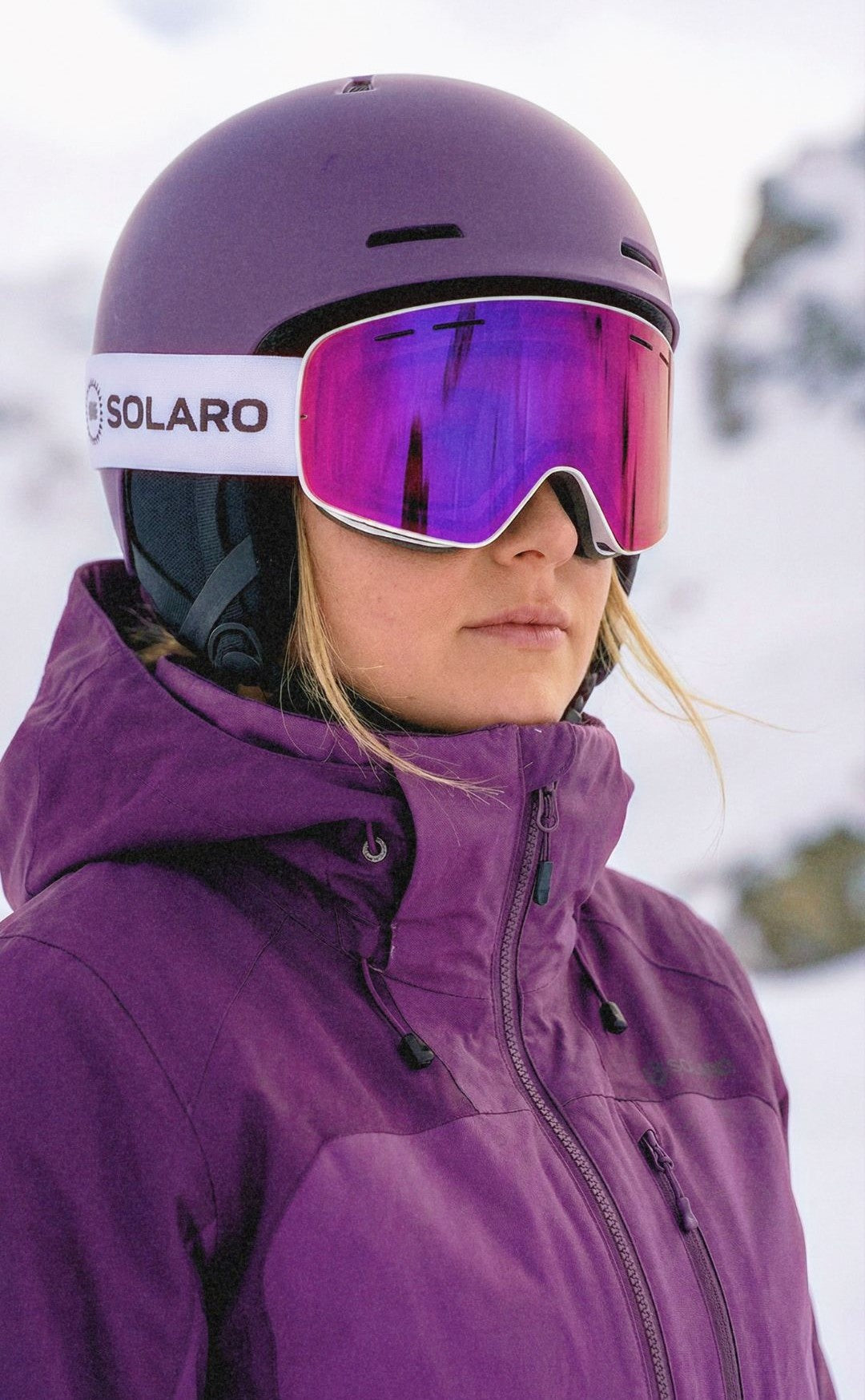
Choosing the right sunglasses for skiing involves more than finding a stylish frame. One of the most important factors to consider is lens color. The right lens tint can influence contrast, brightness, and visual comfort, helping you see your surroundings more clearly in different mountain conditions.
Whether you're skiing under bright sunshine, navigating cloudy slopes, or enjoying a winter adventure at a ski resort, choosing suitable lens colors can make a difference in your outdoor experience.
But with so many options available, how do you know which lens color is best for skiing?
In this guide, we'll explore the best lens colors for skiing, explain how different tints perform in various weather conditions, and share what to consider when choosing your next pair of sunglasses from Solaro Shades.

Why Does Lens Color Matter When Skiing?
Snow-covered mountains create unique lighting conditions. Snow reflects sunlight, while changing weather can affect how much natural light reaches your eyes.
Because of these conditions, choosing the right lens color is essential for visual comfort and contrast perception.
Different lens tints affect how much visible light passes through your sunglasses and how you perceive colors and details.
The right lens color can help:
- Improve contrast: Certain tints make differences between snow, shadows, and terrain easier to distinguish.
- Manage brightness: Darker tints can be more comfortable in bright sunlight.
- Enhance visual comfort: Appropriate lens colors can reduce discomfort caused by intense brightness.
- Adapt to weather conditions: Different tints are suited to different lighting environments.
- Complement your outdoor lifestyle: Stylish lens colors let you enjoy both functionality and appearance.
Keep in mind that lens color alone does not determine UV protection. Always check that your sunglasses offer adequate UVA and UVB protection.

6 Best Lens Colors for Skiing
Not all lens colors perform the same way. Some are better suited for bright sunlight, while others can help improve contrast when the weather becomes cloudy.
Here are six popular lens colors to consider.
1. Gray Lenses: Best for Bright and Sunny Conditions
Gray lenses are a popular choice for skiing on bright, sunny days.
They reduce overall brightness while generally maintaining natural color perception. This makes them a practical option when skiing under strong sunlight or spending time outdoors at high-altitude resorts.
Benefits of gray lenses:
- Help reduce overall brightness.
- Maintain relatively natural color perception.
- Comfortable for bright outdoor environments.
- Versatile for everyday wear beyond skiing.
Best for: Sunny days, bright snow-covered slopes, and outdoor activities with intense sunlight.
If you prefer a neutral viewing experience without significantly changing how colors appear, gray lenses are worth considering.
2. Brown Lenses: Best for Contrast Enhancement
Brown lenses are another excellent option for outdoor sports and mountain adventures.
Their warm tint can enhance perceived contrast, making differences between light and dark areas more noticeable in certain conditions.
This can be useful when observing changes in terrain or navigating areas with varying light and shadow.
Benefits of brown lenses:
- Can enhance perceived contrast.
- Offer a warm and comfortable visual experience.
- Suitable for various outdoor activities.
- Popular for recreational and sports eyewear.
Best for: Partly sunny conditions, changing light, and outdoor environments where contrast is important.
3. Amber Lenses: Best for Cloudy and Overcast Conditions
Amber lenses are commonly chosen for conditions where the light is less intense.
Their warm tint can improve perceived contrast in some environments, helping distinguish details when skies are overcast.
However, the actual performance depends on lens darkness and visible light transmission (VLT), not just the color itself.
Benefits of amber lenses:
- Can enhance contrast perception.
- Provide a warm visual appearance.
- Useful in certain cloudy outdoor conditions.
- Popular for sports and recreational eyewear.
Best for: Overcast days, moderate lighting, and changing weather conditions.
4. Yellow Lenses: Best for Low-Light Conditions
Yellow lenses are often associated with low-light sports eyewear.
Their tint can make the environment appear brighter, which some people find helpful when visibility is reduced.
However, yellow lenses do not actually increase the amount of available light. They filter some incoming visible light, so their suitability depends on the lens's VLT rating.
Benefits of yellow lenses:
- Can enhance perceived contrast in certain low-light environments.
- Offer a bright visual appearance.
- Commonly used in specialized sports eyewear.
Best for: Certain low-light conditions, particularly when paired with an appropriately high VLT.
For heavy snowfall, fog, or very poor visibility, dedicated ski goggles with suitable lenses are generally a better option than ordinary sunglasses.
5. Rose or Pink Lenses: Best for Changing Light Conditions
Rose and pink lenses are popular among outdoor enthusiasts because of their potential to improve contrast perception.
Their tint can help make variations in terrain and shadows more noticeable under certain lighting conditions.
Benefits of rose or pink lenses:
- Can improve perceived contrast.
- Provide a comfortable visual appearance for some users.
- Suitable for selected changing-light environments.
- Offer a distinctive and stylish look.
Best for: Variable lighting, partly cloudy weather, and recreational outdoor activities.
6. Blue or Mirrored Lenses: Best for Bright Outdoor Environments
Blue and mirrored lenses are often chosen for their stylish appearance and bright-light applications.
However, it's important to understand that the outside color of a mirrored lens does not necessarily indicate how much light it blocks.
Performance depends on the lens tint, VLT, filter characteristics, and UV protection.
Benefits of blue or mirrored lenses:
- Can reduce transmitted light when designed with a suitable filter.
- Offer a modern and fashionable appearance.
- Available in different performance categories.
- Suitable for various bright outdoor environments when properly specified.
Best for: Bright outdoor conditions when the lens specifications are appropriate.
Always check the product specifications instead of choosing sunglasses based solely on their exterior lens color.

Best Ski Sunglasses Lens Colors Based on Weather Conditions
Still unsure which lens tint to choose? Here's a quick comparison to help you decide.
|
Weather condition |
Lens color to consider |
Main benefit |
|
Bright and sunny |
Gray |
Reduces overall brightness |
|
Partly sunny |
Brown |
Enhances perceived contrast |
|
Cloudy and overcast |
Amber |
Can improve contrast perception |
|
Low-light conditions |
Yellow |
Can enhance perceived brightness |
|
Changing light |
Rose or pink |
Can improve contrast perception |
|
Bright outdoor conditions |
Suitable mirrored lenses |
Can reduce light transmission |
Important: These are general recommendations. Always check the lens's VLT rating, UV protection, and intended use. For skiing, dedicated snow-sport eyewear is preferable when conditions are challenging.
What Is VLT and Why Should You Consider It When Choosing Ski Sunglasses?
Apart from lens color, another important factor is Visible Light Transmission (VLT).
VLT refers to the percentage of visible light that passes through a lens and reaches your eyes.
A higher VLT means more visible light passes through, while a lower VLT means less light passes through.
Here's a general guide:
- High VLT: Allows more light through and is generally more suitable for low-light conditions.
- Medium VLT: Offers a balance for moderate or variable lighting.
- Low VLT: Allows less light through and is generally more suitable for bright, sunny environments.
For example, darker gray lenses may be more comfortable under intense sunlight, while lighter amber or yellow lenses may be more suitable for certain overcast conditions.
Understanding VLT helps you select sunglasses based on actual lighting performance rather than appearance alone.

Other Important Features to Look for in Ski Sunglasses
Lens color is important, but it shouldn't be the only consideration when purchasing ski sunglasses.
Here are additional features to look for:
1. 100% UV Protection
UV protection should always be a priority. Look for sunglasses that provide 100% UVA and UVB protection or are labeled UV400.
Snow reflects sunlight, and UV exposure can remain significant even when the weather is cloudy.
2. Polarized Lenses
Polarized lenses help reduce reflected glare, which can make bright outdoor environments more comfortable.
However, polarization may also make certain icy surfaces or digital displays harder to see. Consider your skiing conditions before choosing polarized lenses.
3. Comfortable Frame Design
Your sunglasses should fit securely without creating pressure around your nose or ears.
Lightweight frames and comfortable nose support can make a difference during extended outdoor activities.
4. Scratch-Resistant Coating
Scratch-resistant coatings help protect lenses from everyday wear and tear.
Proper cleaning and storage are still necessary to maintain lens quality.
5. Adequate Lens Coverage
Larger lenses and wraparound designs can help reduce exposure to wind, snow, and debris.
For extreme weather and high-speed skiing, dedicated ski goggles offer better overall coverage.
How to Choose the Right Lens Color for Your Lifestyle
The best lens color depends on more than the weather. Your personal preferences, outdoor activities, and intended use should also influence your decision.
Consider these questions before buying:
- Do you spend most of your time outdoors under bright sunlight?
- Do you frequently participate in winter sports?
- Do you prefer natural color perception or enhanced contrast?
- Do you need sunglasses for everyday wear as well as outdoor adventures?
- Are you looking for a specific lens tint to complement your personal style?
If you enjoy a variety of outdoor activities, consider choosing versatile sunglasses that balance UV protection, comfort, and appearance.
Discover Your Next Pair of Sunglasses with Solaro Shades
Finding the right sunglasses means balancing functionality, comfort, and personal style.
Solaro Shades is an eyewear brand to explore when looking for sunglasses that complement your everyday lifestyle and outdoor adventures.
When browsing the Solaro Shades collection, consider the following features before choosing a pair:
- Lens color that matches your preferred look and lighting conditions.
- Verified UV protection for everyday eye protection.
- Comfortable frames suitable for extended wear.
- Lens quality that supports your intended outdoor activities.
- A frame design that complements your personal style.
Whether you're preparing for a winter getaway, enjoying a sunny mountain destination, or looking for stylish everyday eyewear, choosing the right lens specifications can help you get more out of your sunglasses.
Remember to verify each product's specifications before using it for skiing. Not all everyday sunglasses are designed for demanding snow-sport conditions.
Explore Solaro Shades and find eyewear that complements your next outdoor adventure.

Frequently Asked Questions About Ski Sunglasses Lens Colors
What is the best lens color for skiing?
Gray, brown, and amber are popular lens colors for skiing. Gray lenses are useful in bright sunlight, while brown and amber lenses can enhance perceived contrast in certain conditions. The best option depends on the weather and the lens's VLT rating.
Are brown or gray lenses better for skiing?
Gray lenses are generally preferred for maintaining natural color perception in bright conditions. Brown lenses can enhance perceived contrast. Both can be useful, depending on the lighting environment and individual preference.
Are yellow lenses good for skiing?
Yellow lenses can enhance perceived contrast in certain low-light environments. However, their suitability depends on VLT and overall lens specifications. They are not automatically the best option for snowy or cloudy conditions.
Are polarized lenses better for skiing?
Polarized lenses can reduce reflected glare and improve visual comfort in bright environments. However, they may make icy patches harder to distinguish, so some skiers prefer non-polarized lenses.
Do darker lenses provide better UV protection?
No. Lens darkness does not determine UV protection. Clear and lightly tinted lenses can provide excellent UV protection if they are specifically designed to block UVA and UVB rays.
Can I use regular sunglasses for skiing?
Regular sunglasses may be suitable for sunny, mild conditions and casual activities around ski resorts. However, dedicated ski goggles are generally more appropriate for heavy snowfall, strong winds, and demanding skiing conditions.
What lens color is best for cloudy ski days?
Amber, yellow, and rose tints are commonly considered for certain cloudy or low-light conditions because they can enhance perceived contrast. However, check the VLT rating to ensure sufficient visible light transmission.

Final Thoughts
Choosing the best lens colors for skiing can help improve visual comfort and contrast perception in different mountain environments.
Gray lenses are a practical choice for bright sunlight, brown lenses can enhance contrast, and amber or yellow lenses may be useful in selected overcast and low-light conditions. However, always consider UV protection, VLT, lens quality, and overall coverage when making your decision.
If you're looking for sunglasses that combine style with everyday functionality, explore Solaro Shades and discover eyewear that suits your lifestyle.
Choose the right lens, prioritize eye protection, and enjoy every outdoor adventure with confidence.
👋 Ready to see the difference for yourself?
If you're searching for sunglasses that check all the boxes, explore Solaro Shades Sports Sunglasses. Designed with athletes in mind, our glasses offer interchangeable lenses, premium frames, full UV protection, and a limited lifetime warranty to keep you covered on and off the court.
You can also check out our previous blog on How to Choose the Best Ski Sunglasses for Your Needs
Stay sharp. Stay protected. And never let the sun win the point.