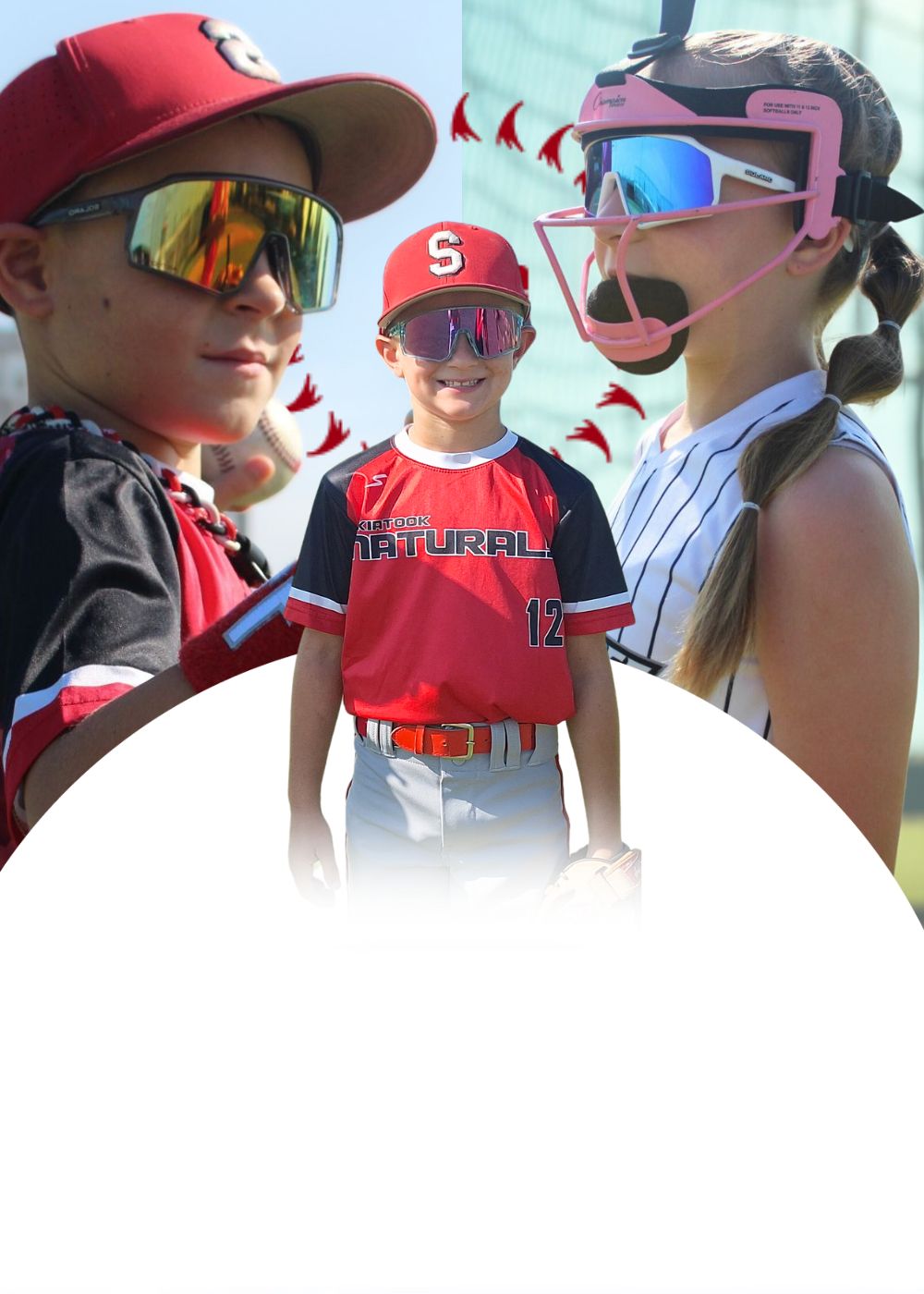
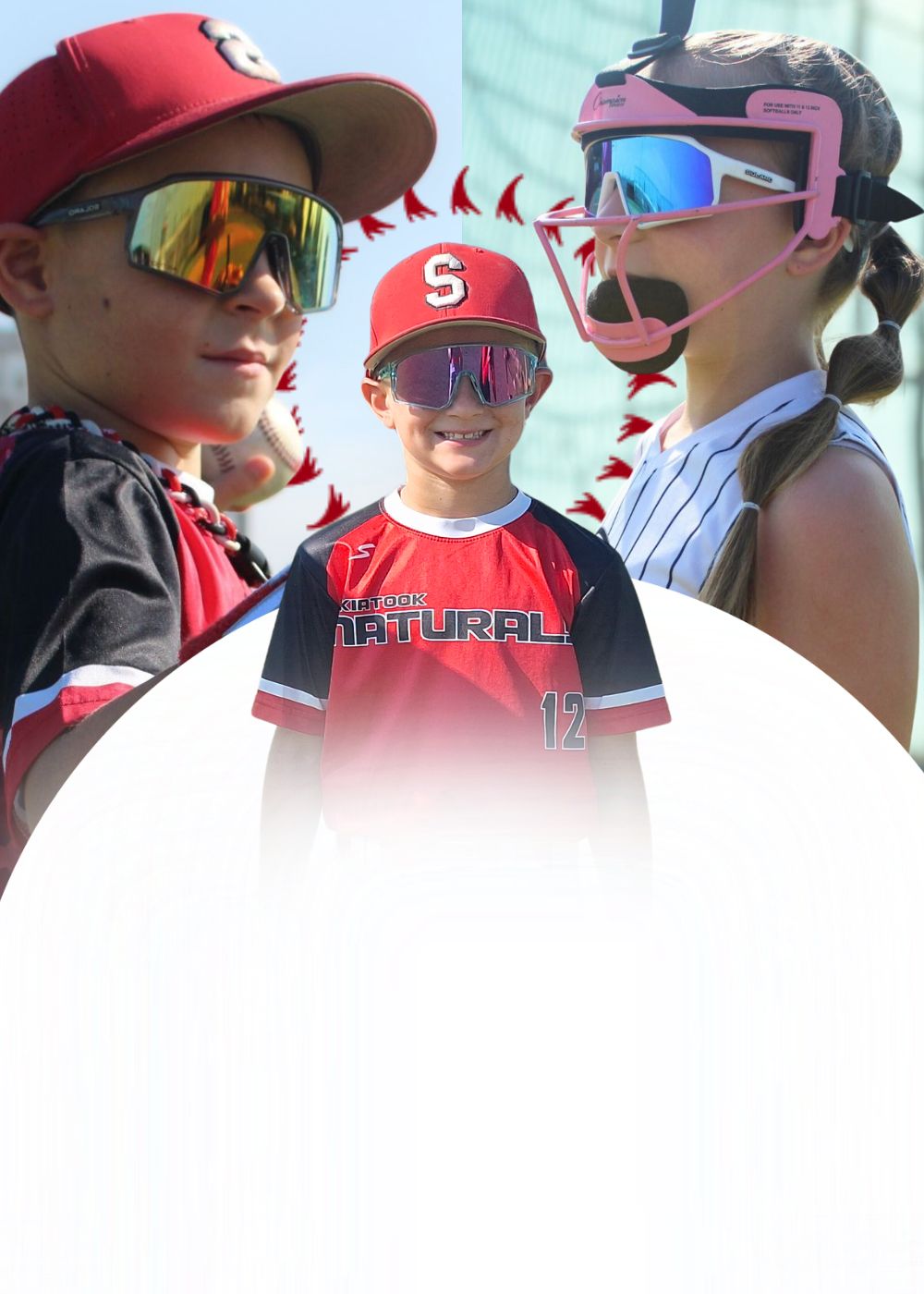
When it comes to gearing up young athletes for baseball season, most parents think about bats, gloves, cleats, and helmets. But there’s one piece of equipment that’s often overlooked — and it’s arguably just as critical for safety and performance: sunglasses with UV protection.
Baseball is a sport played under the open sky, often during the brightest hours of the day. Whether it’s Little League, travel ball, or backyard practice, youth players are exposed to hours of direct sunlight, which can take a real toll on their developing eyes.
In this blog, we’ll dive deep into why UV protection in baseball sunglasses isn’t optional — it’s essential. You’ll learn about the physical dangers of UV rays, how they affect performance, and what features to look for when choosing the right pair for your young athlete.

☀️ Understanding UV Rays: The Invisible Threat
Most people associate UV rays with sunburn, but your eyes are just as vulnerable as your skin — maybe even more so. The sun emits two main types of ultraviolet radiation that reach the Earth:
· UVA rays: Penetrate deep into the eye and can damage the retina.
· UVB rays: More intense, these can damage the cornea and lens.
Young eyes are especially sensitive to UV radiation because the lenses in children's eyes are clearer and let in more UV light. That means their eyes absorb more harmful rays than adults' do — and damage can accumulate over time.
The Risks of Not Wearing UV-Protective Sunglasses:
· Photokeratitis (sunburn of the eye) – causes pain, redness, and blurred vision
· Increased risk of cataracts and macular degeneration later in life
· Temporary vision loss due to glare or bright light exposure
· Reduced ability to track the ball and maintain visual focus
☠️ Did you know? According to the American Optometric Association, children receive three times more annual UV exposure than adults — and most of that exposure happens during outdoor activities like baseball.
⚾ Why UV Protection Is Crucial in Youth Baseball
Baseball is a unique sport when it comes to eye protection. It’s one of the few sports that require players to stare into the sky repeatedly — whether they’re tracking a fly ball, batting under bright lights, or playing outfield during a late-afternoon game.
Glare and Sun Distraction = Poor Performance
Sunlight directly affects a player’s:
· Depth perception
· Hand-eye coordination
· Reaction time
· Accuracy in catching and hitting
A youth player squinting through a cloudless sky isn’t just uncomfortable — they’re at a performance disadvantage. And worse, their eyes are exposed to real damage every second they’re out there without proper sunglasses.

😎 What to Look for in UV-Protective Baseball Sunglasses
Not all sunglasses are created equal. Many cheap or fashion sunglasses may reduce brightness, but they don’t block UV rays unless specifically labeled.
Here’s what to look for when buying sunglasses for your youth baseball player:
✅ 100% UV Protection (UVA & UVB)
This should be clearly marked on the label. “UV 400” is another indicator that the lenses block both UVA and UVB rays.
✅ Wraparound Frames
These protect the eyes from sunlight coming in at angles — especially important for outfielders or catchers looking skyward.
✅ Shatterproof Lenses
Baseballs move fast. Look for polycarbonate or Trivex lenses, which are impact-resistant and won’t shatter upon contact.
✅ Polarization (Optional, But Useful)
Polarized lenses reduce glare from reflective surfaces like bleachers or nearby water. While not essential, they’re helpful for bright environments.
✅ Anti-Fog and Anti-Slip Features
These ensure your child won’t be constantly adjusting their glasses in the heat of a game.
🧠 The Mental Side: UV Protection Improves Focus & Confidence
Kids are naturally distracted — add squinting, watery eyes, or discomfort, and you’ve got a player who’s mentally checked out of the game. Proper sunglasses do more than protect vision — they create comfort and build confidence.
When young athletes feel protected and can see clearly:
· They focus better on the game.
· They’re less likely to make errors due to sun interference.
· They feel more professional and prepared, boosting self-esteem.
🎯 True Story: Many Little League coaches report that the simple act of putting on sport sunglasses makes their players feel more confident and “game-ready” — especially for outfielders who deal with direct sunlight every inning.

🧢 Sunglasses = A Long-Term Investment in Eye Health
UV damage is cumulative — meaning it builds up over time. Protecting your child’s eyes now not only helps them play better today but also sets them up for a lifetime of healthier vision.
As a parent or coach, you’re not just helping them avoid dropped fly balls — you’re helping them avoid:
· Cataracts
· Macular degeneration
· Sun-induced eye strain
· Vision impairment in adulthood
📋 Quick Checklist for Youth Baseball Sunglasses
Before buying, make sure the sunglasses are:
✅ 100% UV protected (UVA & UVB or UV 400)
✅ Made with polycarbonate or shatterproof lenses
✅ Sized for youth faces — snug but comfortable
✅ Wraparound or close-fitting to block side light
✅ Designed for sports use (not fashion wear)
✅ Ventilated and anti-slip for active play

🏆 Final Thoughts: Don’t Let the Sun Win the Game
In baseball, vision is everything. Whether it’s seeing the pitch, tracking a pop fly, or reacting to a line drive, the eyes are working overtime — especially under the sun.
Investing in high-quality, UV-protective sunglasses for your youth athlete isn’t just smart — it’s essential. You're protecting their eyesight, improving their on-field performance, and giving them the mental edge to play with confidence.
So the next time you pack their gear bag, don’t forget the sunglasses. Their eyes — and their game — will thank you.
Ready to see the difference for yourself?
If you're searching for sunglasses that check all the boxes, explore Solaro Shades Youth Sunglasses. Designed with athletes in mind, our glasses offer interchangeable lenses, premium frames, full UV protection, and a limited lifetime warranty to keep you covered on and off the court.
You can also check out our previous blog on Protect Your Eyes Like a Pro: What Athletes Know About Sunglasses and Blue Light